Fil conducteur
La boîte : mettre l’étude en boîte, la ramener à un format.
Une manière de sortir la main de sa représentation classique et académique, de la considérer autrement : comme une forme à réduire, à déplacer, à transformer.
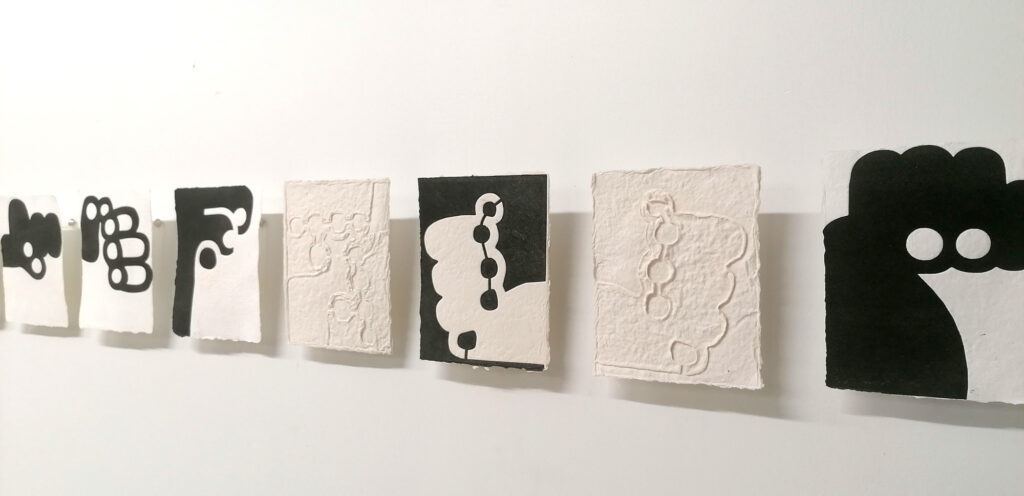
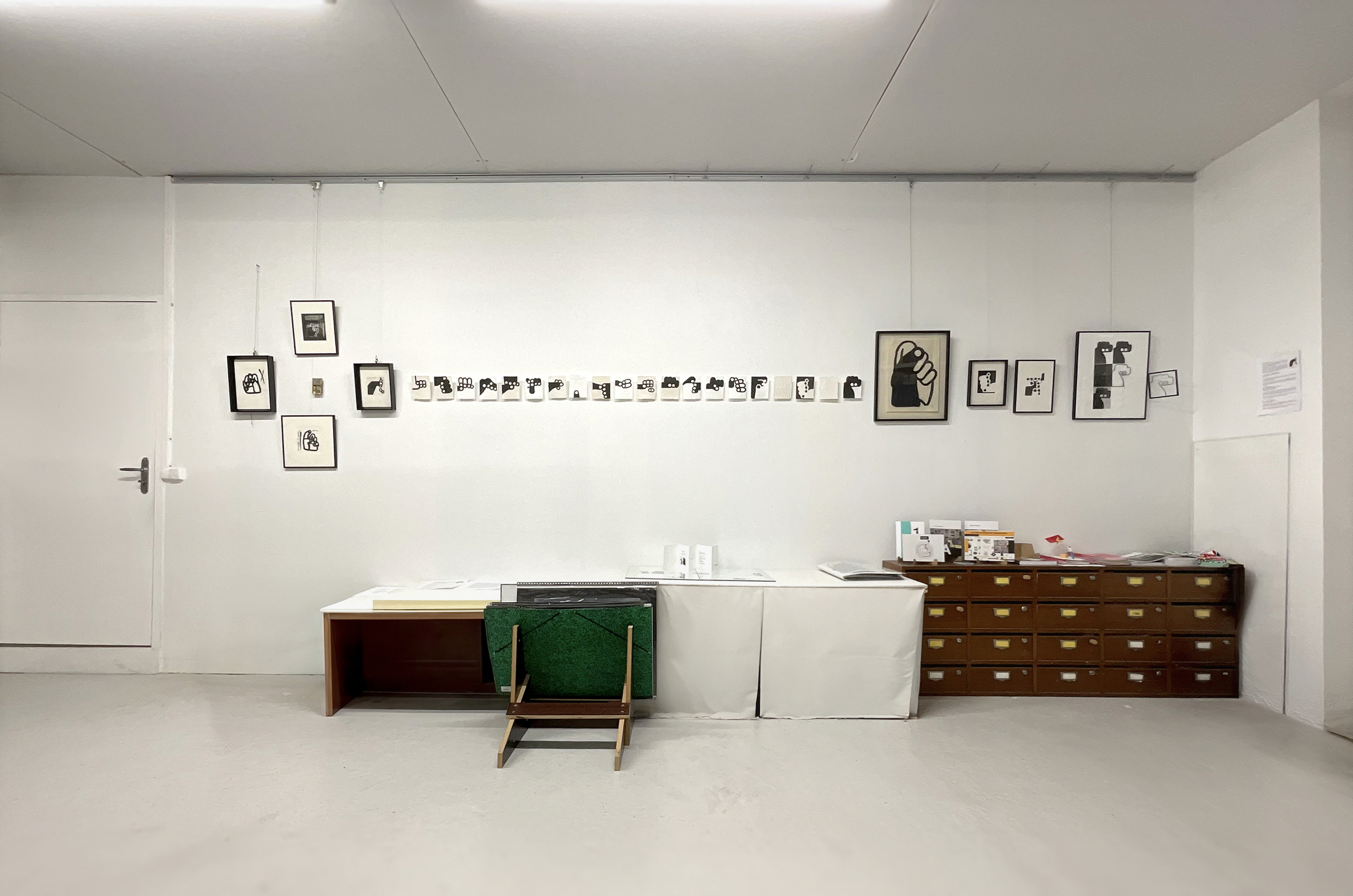
La ligne des petits formats part d’une mesure simple : celle, approximative, de ma main refermée. Vers l’essentiel ouvre cette recherche. La main y est ramenée à sa masse, à ses articulations, à ce qui suffit à la faire reconnaître. Puis l’expérimentation se poursuit, pièce après pièce.
UNE MAIN FERMÉE.
AU LIEU D’ÊTRE OUVERTE VERS L’EXTÉRIEUR,
VERS L’AUTRE, VERS LE SOCIAL.
ET POURTANT, SI POLITIQUE.
La grande main est un sigle fort. Suspendue à un fil de nylon fragile, elle semble pourtant retenue, comme empêchée de rejoindre son support ou de s’en détacher tout à fait. La main affirme une présence, une volonté de faire, mais aussi ce qui peut retenir le geste ou le contraindre. La « main-tient » : tenir, retenir, contenir. Ou ne rien faire.
Un poing fermé se lit comme un poing levé. Et le poing, même sans intention militante, reste chargé d’une dimension politique : celle du refus et de la résistance.
La main. La main. La main…
VOULOIR DIRE, DÉSIRER FAIRE,
VOULOIR FAIRE, DÉFAIRE.
La répétition insiste, jusqu’à ce que la représentation se déplace. La contre-forme inverse le regard : elle ne montre plus la main, mais ce qui l’entoure, ce qu’elle laisse en creux. Une autre manière de lire, de reconnaître, de perdre ses repères.
Puis ce n’est plus tout à fait une main. C’est autre chose. Et pourtant, le sujet persiste, comme un signe dont la forme aurait changé sans avoir entièrement disparu.
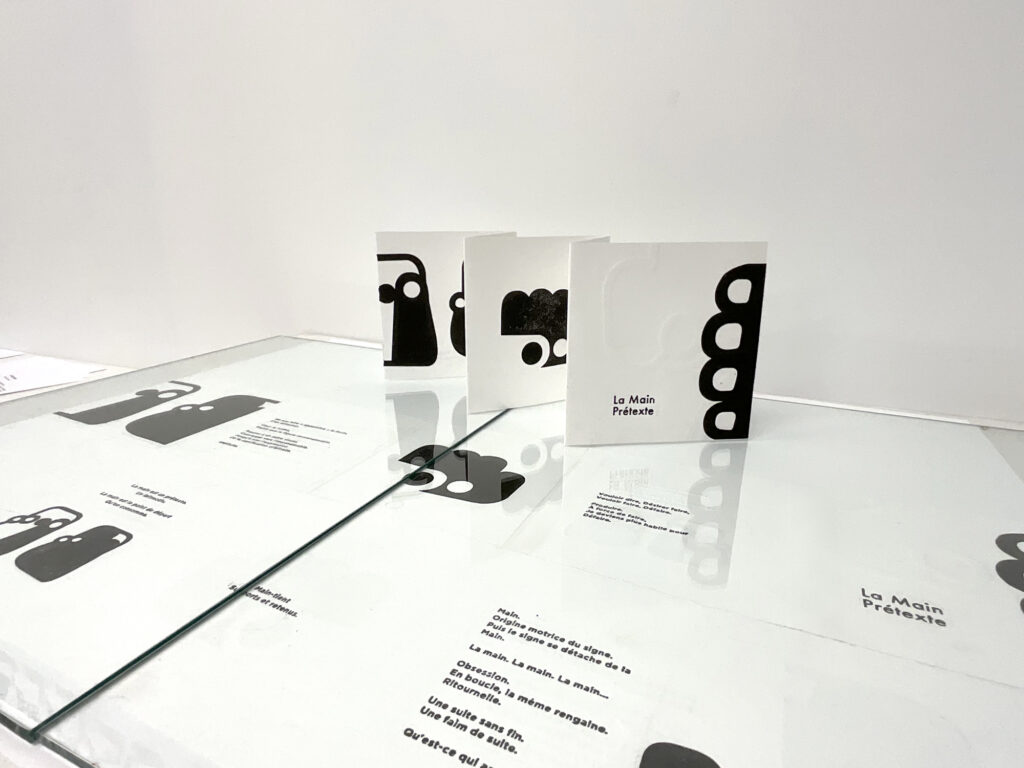
THE HAND,
A PRETEXT
The common thread
The box: boxing the study, bringing it down to a format. A way of taking the hand out of its classical, academic representation and looking at it differently: as a form to be reduced, shifted, transformed.
The small-format series starts from a simple measure: the approximate size of my closed hand. Vers l’essentiel opens this line of research. The hand is brought down to its mass, its joints, to just what is needed for it to be recognized. Then the experiment continues, piece by piece.
A CLOSED HAND.
INSTEAD OF OPENING OUTWARD,
TOWARD THE OTHER, TOWARD THE SOCIAL.
AND YET, SO POLITICAL.
The large hand is a strong emblem. Hanging from a fragile nylon thread, it seems held back, kept from reaching its support or from breaking away from it entirely. The hand asserts a presence, a will to make, but also whatever can hold the gesture back or constrain it. La « main-tient »: the hand that holds, holds back, holds in. Or does nothing.
A closed fist reads as a raised fist. And the fist, even without activist intent, remains charged with a political dimension: that of refusal and resistance.
The hand. The hand. The hand…
MEANING TO SAY, DESIRING TO MAKE, WANTING TO MAKE, UNMAKING.
Repetition insists until the representation shifts. The negative space reverses the gaze: it no longer shows the hand, but what surrounds it, the hollows it leaves behind. Another way of reading, of recognizing, of losing one’s bearings.
Then it is no longer quite a hand. It is something else. And yet the subject persists, like a sign whose form has changed without having entirely disappeared.